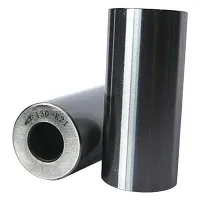
BIGUO (KS) Auto Parts Industries was established in 1990. It has become a reliable Strong Manufacturer in International market in the Field of Piston Pin and Cylinder Liner & Sleeve under the Brand name "BIGUO". Now we're the OEM suppliers for engine factories in Asia and Middle East. And we've cooperated with three famous international auto parts Groups.
Our factory
BIGUO (KS) Auto Parts Industries was established in 1990. It has become a reliable Strong Manufacturer in International market in the Field of Piston Pin and Cylinder Liner & Sleeve under the Brand name "BIGUO". BIGUO Auto Parts Industries is spread on 15,000 SQ. fts. land, well equipped with foundry and machining machineries and equipments.
Our product
We engaged in manufacturing PISTON PIN and Cylinder Liners & Sleeves for all types of Engines Applicable in Automobile, Tractor, Compressor,outboard, Generator, forklift,Earth Mover and Diesel Engine.
Quality control
We, at Biguo Auto Parts Industries strive to give good quality products at competitive prices in the identified global markets and provide customer satisfaction by consistently complying with specified requirements, continuous process improvement, involvement of personnel at all levels and upgradation of technology.
Production market
Since last 25 years BIGUO Auto Parts Ind. is manufacturing and exporting Piston Pin and Cylinder Liner & Sleeve of all type of Engines & Vehicles and being accepted in Domestic as well as Europe, America, Assia, Middle East & African market due to achieving International standard quality and implementing professional marketing and management system.


In the semi floating piston pin configuration, the pin is usually fixed relative to the piston by an interference fit with the journal in the piston.

The piston pin has an incredibly vital job, shuttling over 11,000 pounds of force up and down the bore.

Engine piston pins, also called gudgeon pins, or wrist pins, are used to link the small end of the connecting rod to the piston.

These precision piston pins are ISO 9000 and QS 9000 certified and statistical process control (SPC) is fully implemented throughout manufacturing.

As a Cr-Ni series low alloy steel, after carburizing, quenching and low temperature tempering, the surface of DIN 15CrNi6 steel exhibits high fatigue strength.

The current study examined the plain fatigue and the fretting fatigue behaviors of the piston pin 16MnCr5 alloy steel under fully-reversed rotating bending loading.

Normalizing For piston pin 17CrNi6
Nominal normalizing temperature:850-880°C
Hold the temperature for several hours
Cooling in the air

If a power adder combined with higher specific output is on your agenda Trend offers a premium alternative to the H-Series that begins life using a much stronger H-13 Tool steel alloy.
The gudgeon pin is typically a forged short hollow rod made of a steel alloy of high strength and hardness that may be physically separated from both the connecting rod and piston or crosshead. The design of the gudgeon pin, especially in the case of small, high-revving automotive engines is challenging. The gudgeon pin has to operate under some of the highest temperatures experienced in the engine, with difficulties in lubrication due to its location, while remaining small and light so as to fit into the piston diameter and not unduly add to the reciprocating mass.
Advantages of Gudgeon Pin
Allowing rotation
Gudgeon pins allow the piston to rotate slightly as it moves up and down in the cylinder. This rotation helps accommodate the angular motion of the connecting rod as the crankshaft turns.
Load distribution
They help distribute the load from the piston to the connecting rod, minimizing wear and tear on both components.
Connection
They connect the piston to the connecting rod, allowing for the transfer of force generated during combustion. This connection is crucial for converting the linear motion of the piston into rotational motion at the crankshaft.
Facilitating movement
Gudgeon pins enable smooth movement of the piston within the cylinder, reducing friction and wear. This is often enhanced by the use of bushings or bearing surfaces.
Design Options of Gudgeon Pin
Gudgeon pins use two broad design configurations: semi-floating and fully floating.
1.Semi-floating
In the semi-floating configuration, the pin is usually fixed relative to the piston by an interference fit with the journal in the piston. The connecting rod small end bearing thus acts as the bearing alone. In this configuration, only the small end bearing requires a bearing surface, if any. If needed, this is provided by either electroplating the small end bearing journal with a suitable metal, or more usually by inserting a sleeve bearing or needle bearing into the eye of the small end, which has an interference fit with the aperture of the small end. During overhaul, it is usually possible to replace this bearing sleeve if it is badly worn. The reverse configuration, fixing the gudgeon pin to the connecting rod instead of to the piston, is implemented using an interference fit with the small end eye instead, with the gudgeon pin journals in the piston functioning as bearings. This arrangement is usually more difficult to manufacture and service because two bearing surfaces or inserted sleeves complicate the design. In addition, the pin must be precisely set so that the small end eye is central. Because of thermal expansion considerations, this arrangement was more usual for single-cylinder engines as opposed to multiple cylinder engines with long cylinder blocks and crankcases, until precision manufacturing became more commonplace.
2.Fully floating
In the fully floating configuration, a bearing surface is created both between the small end eye and gudgeon pin and the journal in the piston. The gudgeon pins are usually secured with circlips. No interference fit is used in any instance and the pin 'floats' entirely on bearing surfaces. The average rubbing speed of each of the three bearings is halved and the load is shared across a bearing that is usually about three times the length of the semi-floating design with an interference fit with the piston.
When it comes to transferring the energy from the pistons to the crankshaft, gudgeon pins have a pivotal role. Performance pins differ in materials, designs, weight and overall thickness from those found in production engines. The choice of materials, and how these are treated determine crucial factors in the performance of every gudgeon pin.
Generally, pins are made from steel or steel alloys in what is known as carburising or case hardening. This improves stiffness and reduces wear by adding trace amounts of manganese, nickel and chromium. Further hardening can be carried out with nitride treatment, where the addition of chromium, aluminium or titanium, increases the stresses the pin can take before galling sets in. The same treatment is often applied to crankshafts where inherent strength and rigidity determine rotational speed and stiffness. This is in extreme loads, and higher rpms. Treated pins will always outperform those that are left without.
Varying levels of stiffness can be achieved through experimentation with wall thicknesses, especially in motorsport where combinations of other metals and alloys, besides steel, have produced interesting results. Wear from excessive friction can be minimised with dlc or diamond-like coatings both to the piston bosses and bushings and conrod top ends.
The gudgeon pin is typically a forged short hollow rod made of a steel alloy of high strength and hardness that may be physically separated from both the connecting rod and piston or crosshead.
The design of the gudgeon pin, especially in the case of small, high-revving automotive engines, is challenging.
The gudgeon pin has to operate under some of the highest temperatures experienced in the engine, with difficulties in lubrication due to its location, while remaining small and light so as to fit into the piston diameter and not unduly add to the reciprocating mass.
The requirements for lightness and compactness demand a small diameter rod that is subject to heavy shear and bending loads, with some of the highest-pressure loadings of any bearing in the whole engine.
To overcome these problems, the materials used to make the gudgeon pin and the way it is manufactured are amongst the most highly engineered of any mechanical component found in internal combustion engines.
Gudgeon Pin Connection for Internal Combustion Engine
Gudgeon pins are usually secured against end movement by spring circlips, and some bearing length has to be sacrificed in order to accommodate the clips, either in grooves in the piston bosses, or on the pin ends. In another construction end movement is restrained by gudgeon pin end plugs, push fitted in the outer ends of the pin bores. These plugs, of some such suitable material as phosphor bronze or aluminum which will not damage the cylinder, have end faces shaped to ride on the cylinder wall without affecting the freedom of the pin to rotate. The construction is generally unsatisfactory.
In a gudgeon pin connection in accordance with the pin is of the maximum permissible length and is faced on each end for contact with the cylinder wall and to allow free rotation. The ends of the pin are faced with material different from that of the pin itself, deposited in layers of appropriate thickness. It is thus possible to attain low friction between the pin and the cylinder wall without affecting the hardness and rigidity of the gudgeon pin and without losing the benefit of the maximum bearing length possible with a given pin and piston. Suitable facing materials include aluminum bronze which may be deposited on alloy steel pins by flame gun or by plasma gun during manufacture.
The invention is applicable both to centrally located and offset gudgeon pin constructions. In order that the invention may be better understood the construction of a connection with a central gudgeon pin and of a connection with an offset pin are shown, by way of example, in the accompanying drawing.
Bearing surface material may be applied on the gudgeon pin ends by any suitable method. Thus, any of the commercially used methods of metal deposition by means of flame-gun or by plasma-gun, or by electroplating, may be employed with or without the application of an intermediate bonding layer of different material. In practice it is considered that a bearing layer thickness of about 0.030 inch will be the maximum that is likely to be required, regardless of the size of the gudgeon pin, thus simplifying finished machining requirements.
What Is the Function of a Gudgeon Pin in a Piston?
Gudgeon pin is very essential component of any engine.Piston is connected with the upper part of the connecting rod with the help of Gudgeon pin with two circlips on both the sides to ensure the piston is positioned in a better position to move in reciprocating motion inside the engine.Lower part of the connecting rod is fastened to the crank shaft with the help of big end bearings which pushes the crankshaft to transfer the reciprocating motion to circular motion during the downward movement of piston from TDC to BDC.Flywheel is connected at the rear end of crank shaft.Oil from the connecting rod lubricate the Gudgeon pin and piston for smooth operation of piston inside bore.Oil from the crank shaft is forced thro the connecting rod bearing lower centre to the connecting rod upper bush.There is a direct hole inside the connecting rod from lower part to the upper portion of connecting rod for oil to flow and serve the purpose of lubrication.
Our factory
BIGUO (KS) Auto Parts Industries was established in 1990. It has become a reliable Strong Manufacturer in International market in the Field of Piston Pin and Cylinder Liner & Sleeve under the Brand name "BIGUO". Now we're the OEM suppliers for engine factories in Asia and Middle East. And we've cooperated with three famous international auto parts Groups. Since last 25 years BIGUO Auto Parts Ind. is manufacturing and exporting Piston Pin and Cylinder Liner & Sleeve of all type of Engines & Vehicles and being accepted in Domestic as well as Europe, America, Assia, Middle East & African market due to achieving International standard quality and implementing professional marketing and management system. By strict monitoring of orders and developing stock plans in material, we maintain and deliver schedules in accordance to the requirements.

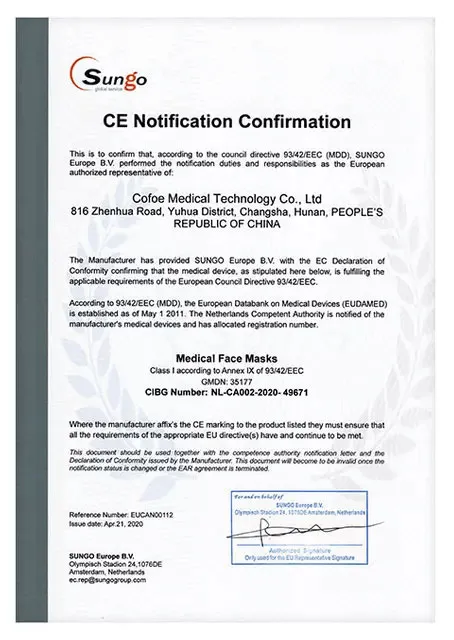
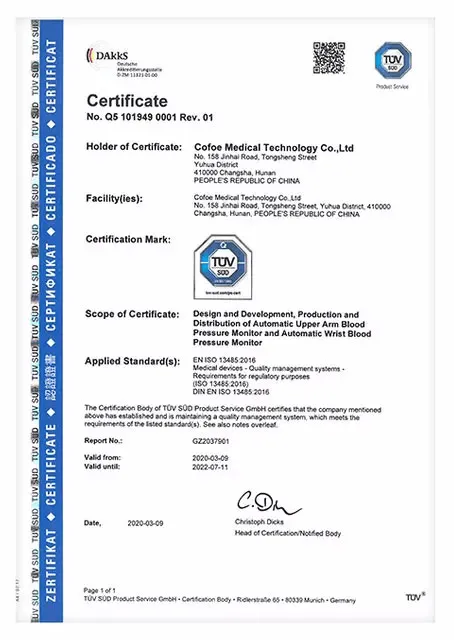
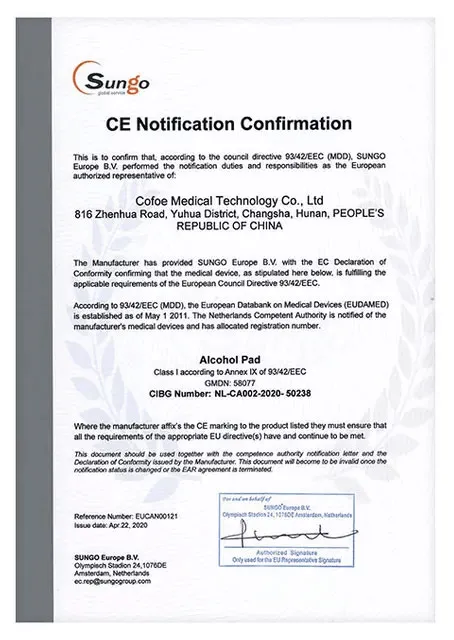
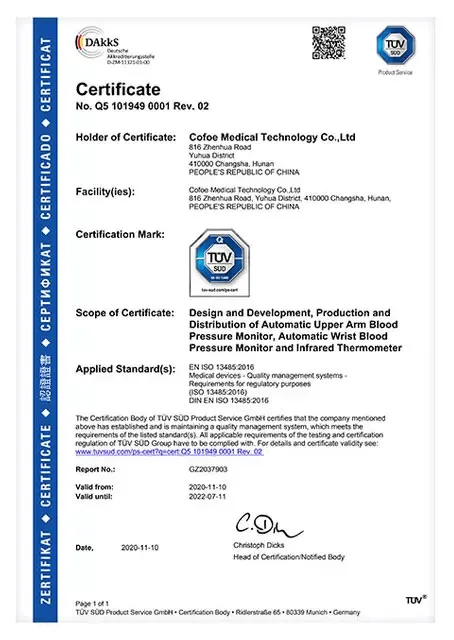
Certificate