Piston Rings
A piston ring is a metallic split ring that is attached to the outer diameter of a piston in an internal combustion engine or steam engine. Sealing the combustion chamber so that there is minimal loss of gases to the crank case. Improving heat transfer from the piston to the cylinder wall. Maintaining the proper quantity of the oil between the piston and the cylinder wall. Regulating engine oil consumption by scraping oil from the cylinder walls back to the sump. Most piston rings are made from cast iron or steel.
Advantages of Piston Rings
Reduced friction
One of the key advantages of using piston rings is their extremely low coefficient of friction. This means they generate minimal frictional forces against the cylinder wall during operation. As a result, there is less energy loss due to friction, leading to improved compressor efficiency.
Improved wear resistance
Ptfe has exceptional wear resistance properties compared to other materials commonly used for piston rings. The self-lubricating nature reduces wear on the ring itself and the cylinder wall it meets during operation. This leads to increased durability and extended service life for the ring and other components with the compressor.
Effective sealing capability
Effective sealing between the piston and cylinder wall is crucial for maintaining compression efficiency in a compressor system. The unique properties of allow it to create a tight seal, preventing gas leakage and ensuring optimal compression performance. This results in improved overall system efficiency and reduced energy consumption.
Chemical resistance
Compressors often handle various gases, some of which May be chemically aggressive or contain contaminants. It is highly resistant to different chemicals, making it an ideal choice for piston rings in compressors that operate in demanding environments. The chemical resistance ensures that the piston rings can withstand exposure to corrosive gases without degradation or loss of performance.


Our factory
BIGUO (KS) Auto Parts Industries was established in 1990. It has become a reliable Strong Manufacturer in International market in the Field of Piston Pin and Cylinder Liner & Sleeve under the Brand name "BIGUO". BIGUO Auto Parts Industries is spread on 15,000 SQ. fts. land, well equipped with foundry and machining machineries and equipments.
Our product
We engaged in manufacturing PISTON PIN and Cylinder Liners & Sleeves for all types of Engines Applicable in Automobile, Tractor, Compressor,outboard, Generator, forklift,Earth Mover and Diesel Engine.
Quality control
We, at Biguo Auto Parts Industries strive to give good quality products at competitive prices in the identified global markets and provide customer satisfaction by consistently complying with specified requirements, continuous process improvement, involvement of personnel at all levels and upgradation of technology.
Production market
Since last 25 years BIGUO Auto Parts Ind. is manufacturing and exporting Piston Pin and Cylinder Liner & Sleeve of all type of Engines & Vehicles and being accepted in Domestic as well as Europe, America, Assia, Middle East & African market due to achieving International standard quality and implementing professional marketing and management system.
What Are Piston Rings Made Of?
Many piston rings are offered in ductile iron or steel today for performance engine builds.
When it comes to piston ring material types there are a few ring materials no longer used or only used in specialty applications now. Currently the most common piston ring material types for automotive engines are cast iron, ductile iron, and steel. While steel does have the highest tensile strength, don’t count out cast iron or ductile iron rings for the right applications. For example, if you’re performing a basic “hone and ring” job to drop back into your daily driver there is no need for the added expense of ductile iron or steel rings.
1.Cast Iron
Fragile piston ring material properties, best used for stock engine builds due to low tensile strength. Low cost, great option for a budget rebuild.
2.Ductile Iron
Stronger piston ring material properties with double the tensile strength of gray iron rings. Better option for performance engine builds.
3.Steel
Better still in tensile strength and fatigue strength over ductile iron rings. Better option for boosted and nitrous applications. Used in narrow ring width applications for better sealing and less blow-by.

Types of Piston Rings
A small engine commonly uses three types of piston rings:
1.Compression rings or pressure rings
Compression rings seal above the piston, preventing the combustion side from leaking gas. These rings are positioned in the first groove of the piston.
According to the engine’s design, this May vary. These rings serve the dual purpose of sealing combustion gases and transferring heat from the piston walls to the piston.
A layer of oil left by the oil ring is sheared, providing sufficient lubrication for the top compression rings. Additionally, it aids in sealing and heat transfer with the top compression ring.
2.Wiper rings
Napier rings, also known as wiper rings or backup compression rings, are installed beneath compression rings. They serve primarily to remove excess oil from the liner surface and to stop any gas leakage that escapes the top compression ring further down. In most wiper rings, the taper angle face is located toward the bottom so that it can wipe against the crankshaft during piston movement.
Oil consumption increases if the wiper ring tapered angle needs to be installed correctly near the compression ring. The wiper ring is used when excess oil is being wiped towards the combustion chamber.
3.Oil control/scrapper rings
Lubricating oil passes up and down the cylinder walls through oil control rings. Rings like these also spread the oil evenly along the liner’s circumference.
Cylinder walls are splashed with oil, and oil is scraped off the cylinder walls by these rings and returned to the crankcase.
The cylinder face and ring face are sealed together, so the oil cannot pass through.
The oil ring has holes or slots drilled into its radial center, which allow excess oil to flow into the reservoir.
One-piece or two-piece oil rings are available. By having chamfered edges on either the outer sides or facing the combustion chamber, rings can increase contact pressure with the liner surface to reduce oil consumption through more efficient oil scraping.
The coil spring on a two-piece oil control ring acts around the entire circumference of the ring to maintain pressure and contact, as well as a cast iron or profiled steel ring.
Design of Piston Rings
Piston rings are designed to seal the gap between the piston and the cylinder wall. If this gap were too small, thermal expansion of the piston could mean the piston seizes in the cylinder, causing serious damage to the engine. On the other hand, a large gap would cause insufficient sealing of the piston rings against the cylinder walls, resulting in excessive blow-by (combustion gases entering the crankcase) and less pressure on the piston, reducing the power output of the engine.
The sliding motion of the piston ring inside the cylinder wall causes friction losses for the engine. The friction caused by piston rings is approximately 24% of the total mechanical friction losses for the engine. The design of the piston rings is therefore a compromise between minimising friction while achieving good sealing and an acceptable lifespan.
Lubrication of piston rings is difficult and has been a driving force to improvements in the quality of motor oil. The oil must survive high temperatures and harsh conditions with a high-speed sliding contact. Lubrication is particularly difficult as the rings have an oscillating motion rather than continuous rotation (such as in a bearing journal). At the limits of piston movement, the ring stops and reverses direction. This disrupts the normal oil wedge effect of a hydrodynamic bearing, reducing the effectiveness of the lubrication.
Rings are also sprung to increase the contact force and to maintain a close seal. The spring force is provided by either the stiffness of the ring itself or by a separate spring behind the seal ring.
It is important that rings float freely in their grooves within the piston, so that they can stay in contact with the cylinder.Rings binding in the piston, usually due to a build-up of either combustion products or a breakdown of the lubricating oil, can cause engine failure and is a common cause of failure for diesel engines.[citation needed]
Sealing is often achieved by multiple rings, each with their own function, using a metal-on-metal sliding contact. Most pistons have at least two piston rings per cylinder. Automotive piston engines typically have three rings per cylinder.The top two rings—known as compression rings—are primarily for sealing the combustion chamber. The bottom ring—known as the oil control ring—is primarily for controlling the supply of oil to the cylinder wall, in order to lubricate the piston skirt and the oil control rings.
The compression rings in an automotive engine typically have a rectangular or keystone shaped cross-section. The upper compression ring typically has a barrel profile for the periphery, while the lower compression ring typically has a taper napier facing. Some engines also use a taper facing for the top ring, and simple plain-faced rings were used in the past.
Oil control rings are typically made from either a single piece of cast iron, multiple pieces of steel, or steel/iron with a helical spring backing to create the tension required for a close seal. Cast iron oil rings and rings with a helical spring backing have two scraping lands of various detailed form. On the other hand, multi-piece steel oil control rings usually consist of two thin steel rings (called rails) with a spacer-expander spring between them to keep the two rails apart and provide radial pressure. The gap in the piston ring compresses to a few thousandths of an inch when inside the cylinder bore. Ring gap shapes include square cut, angle cut, tite joint, step cut, hook step and mitre step.

Generally, two approaches are used to install rings. Expanders are not limited to engineers and engineering experts. Other people put them on by rolling them on.
During the installation of a ring, the basic technique is to minimize the distortion of the ring while applying gentle pressure on the ring to ensure that it stays in place.
This will enable you to gap the piston rings correctly.
Installation of the oil ring expander begins with following the instructions on or included with the package provided by the ring manufacturer. Expanders must not overlap; after that, they must be rolled on carefully.
Your personal preferences also play a role in how piston rings are installed. Techniques vary as well.
During installation, you only need to avoid scoring the ring lands. You can be sure that the deed is well done and appropriate if you minimize distortion and prevent damage to the ring.
When Do Piston Rings Need Maintenance?
It is important to know when your piston rings need maintenance to ensure you don’t inspect them more often than required. To that effect, the following will help you decide if your piston rings are in dire need of maintenance.
Low-Level Performance
Even the best engine can have a decline in its performance, and if that’s the case with your engine, it may need maintenance of its piston rings.
Here, a simple replacement of the piston rings will restore the quality performance of the machine.
Reduction in Piston Quality
Piston rings often come with additional coating or a chrome layer to make them more durable.
However, if this protective layer seems to be wearing off earlier than expected, then it’s a sign that your engine needs to be checked.
Excessive Oil Consumption
If your engine needs more oil than usual to run, then it could be a sign that its piston rings need to be changed.
Excess oil being consumed may also lead to a high release of smoke from the engine.
Piston rings must be inspected to ensure proper operation and then either cleaned or replaced (if broken or worn).
There is a higher position for the top ring groove in 2-stroke engines than in 4-stroke engines.
1.Care during inspection
A screwdriver is used for pressing piston rings during normal scavenge space inspections.
The purpose of doing this is to check whether or not the rings have a spring action or are tensioned.
Additionally, this will tell us whether the ring is broken. A broken ring will result in a lack of spring action because the ring is not functioning.
You need a thorough review of the rings to ensure they do not stick in the grooves due to carbon deposits. This could lead to the rings getting stuck and finally breaking, causing a lot of damage to the lining in the process.
2.While in a major overhaul
A new piston ring set is usually installed during significant overhauls. If the rings need to be scrapped, the following steps should be considered:
Firstly; the piston ring must be removed from the groove if it is stuck there.
When the rings have a reduced axial height and ample clearance between the rings and groove.
There is peeling or damage to the chrome layer. During the overhaul, carbon deposits must be removed from the grooves, and damage must be checked.
Our factory
BIGUO (KS) Auto Parts Industries was established in 1990. It has become a reliable Strong Manufacturer in International market in the Field of Piston Pin and Cylinder Liner & Sleeve under the Brand name "BIGUO". Now we're the OEM suppliers for engine factories in Asia and Middle East. And we've cooperated with three famous international auto parts Groups. Since last 25 years BIGUO Auto Parts Ind. is manufacturing and exporting Piston Pin and Cylinder Liner & Sleeve of all type of Engines & Vehicles and being accepted in Domestic as well as Europe, America, Assia, Middle East & African market due to achieving International standard quality and implementing professional marketing and management system. By strict monitoring of orders and developing stock plans in material, we maintain and deliver schedules in accordance to the requirements.

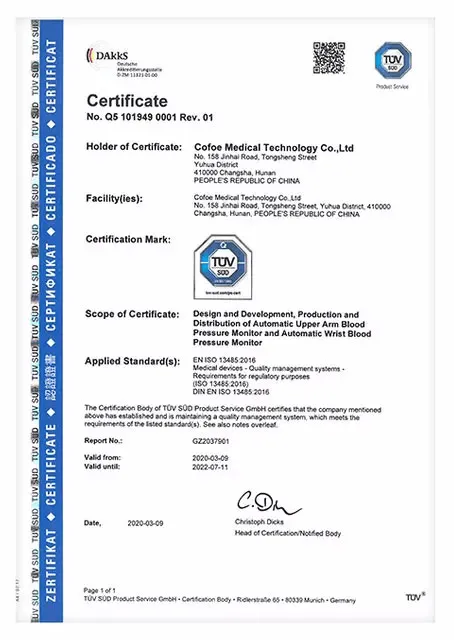
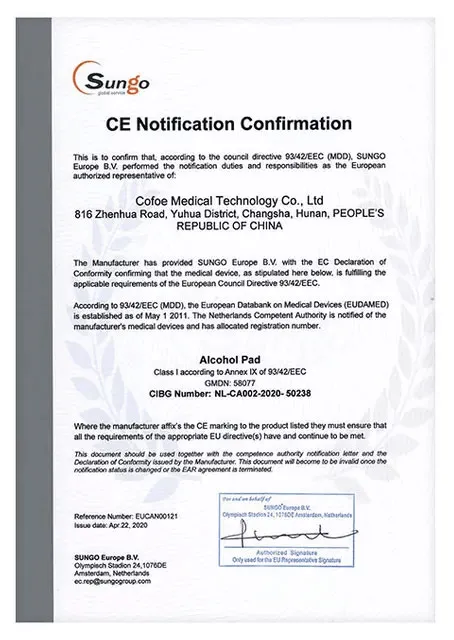
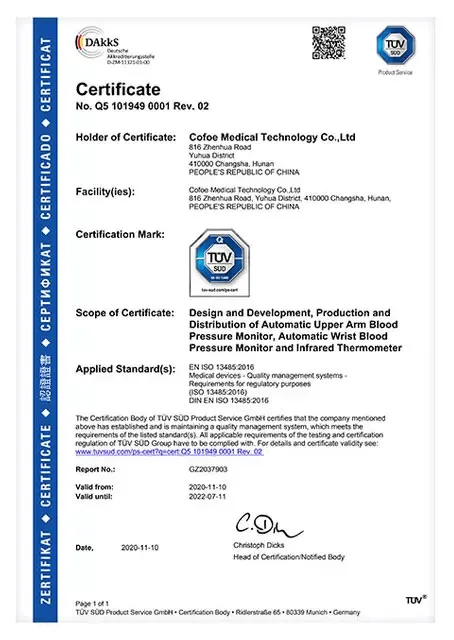
Certificate