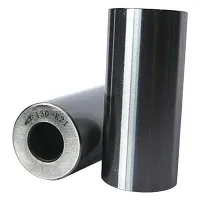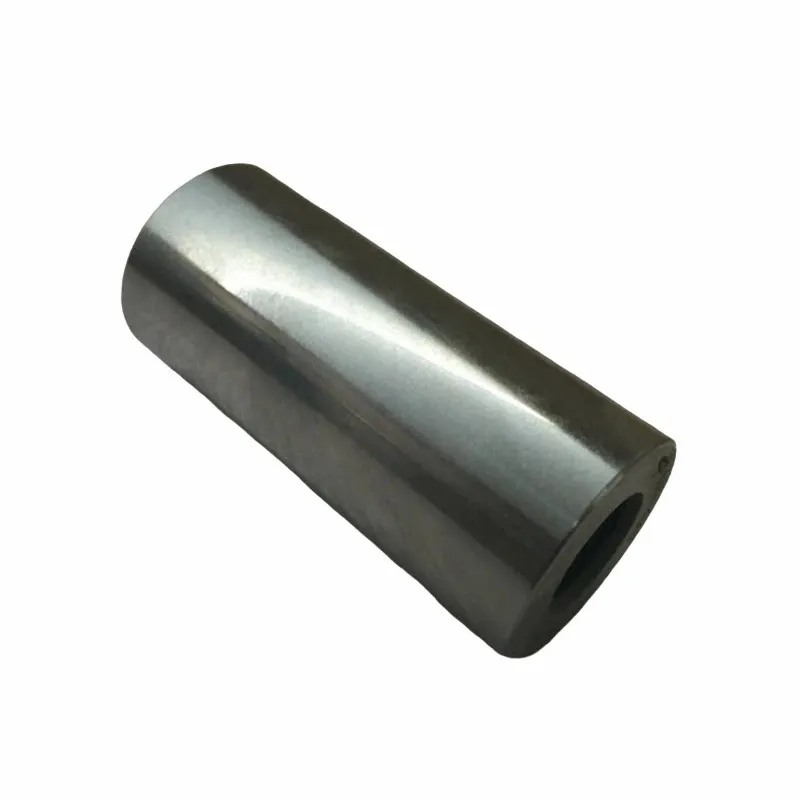
BIGUO (KS) Auto Parts Industries was established in 1990. It has become a reliable Strong Manufacturer in International market in the Field of Piston Pin and Cylinder Liner & Sleeve under the Brand name "BIGUO". Now we're the OEM suppliers for engine factories in Asia and Middle East. And we've cooperated with three famous international auto parts Groups.
Our factory
BIGUO (KS) Auto Parts Industries was established in 1990. It has become a reliable Strong Manufacturer in International market in the Field of Piston Pin and Cylinder Liner & Sleeve under the Brand name "BIGUO". BIGUO Auto Parts Industries is spread on 15,000 SQ. fts. land, well equipped with foundry and machining machineries and equipments.
Our product
We engaged in manufacturing PISTON PIN and Cylinder Liners & Sleeves for all types of Engines Applicable in Automobile, Tractor, Compressor,outboard, Generator, forklift,Earth Mover and Diesel Engine.
Quality control
We, at Biguo Auto Parts Industries strive to give good quality products at competitive prices in the identified global markets and provide customer satisfaction by consistently complying with specified requirements, continuous process improvement, involvement of personnel at all levels and upgradation of technology.
Production market
Since last 25 years BIGUO Auto Parts Ind. is manufacturing and exporting Piston Pin and Cylinder Liner & Sleeve of all type of Engines & Vehicles and being accepted in Domestic as well as Europe, America, Assia, Middle East & African market due to achieving International standard quality and implementing professional marketing and management system.


In the semi floating piston pin configuration, the pin is usually fixed relative to the piston by an interference fit with the journal in the piston.

The piston pin has an incredibly vital job, shuttling over 11,000 pounds of force up and down the bore.

In its most basic form the gudgeon pin is simply a piece of round bar. However, very few engines other than very basic, low-budget units – are equipped with solid gudgeon pins as standard.

These precision piston pins are ISO 9000 and QS 9000 certified and statistical process control (SPC) is fully implemented throughout manufacturing.

As a Cr-Ni series low alloy steel, after carburizing, quenching and low temperature tempering, the surface of DIN 15CrNi6 steel exhibits high fatigue strength.

The current study examined the plain fatigue and the fretting fatigue behaviors of the piston pin 16MnCr5 alloy steel under fully-reversed rotating bending loading.

Normalizing For piston pin 17CrNi6
Nominal normalizing temperature:850-880°C
Hold the temperature for several hours
Cooling in the air

If a power adder combined with higher specific output is on your agenda Trend offers a premium alternative to the H-Series that begins life using a much stronger H-13 Tool steel alloy.
The engine piston pin is a cylindrical pin mounted on the skirt of the piston, and its middle part passes through the small head hole of the connecting rod, which is used to connect the piston and the connecting rod and transmit the gas force from the piston to the connecting rod. In order to reduce the weight, the piston pin is generally made of high quality alloy steel and made into a hollow. The piston pin is used to connect the piston and the connecting rod, and transmit the force that the piston is subjected to to the connecting rod or vice versa. The piston pin is subjected to a large cyclic shock load under high temperature conditions, and it is difficult to form a lubricant film because the piston pin does not swing at a large angle in the pin hole, so the lubrication conditions are poor.
Advantages of Engine Piston Pin
Allowing rotation
Engine piston pins allow the piston to rotate slightly as it moves up and down in the cylinder. This rotation helps accommodate the angular motion of the connecting rod as the crankshaft turns.
Load distribution
They help distribute the load from the piston to the connecting rod, minimizing wear and tear on both components.
Facilitating movement
Engine piston pins enable smooth movement of the piston within the cylinder, reducing friction and wear. This is often enhanced by the use of bushings or bearing surfaces.
Brief Introduction to the Basic Knowledge of Engine Piston Pin
The engine piston pin is also known as a wrist pin or gudgeon pin, that used to connect the piston to the connecting rod and provides a bearing for the connecting rod to pivot upon as the piston moves.
In very early engine designs, including those driven by steam, and many very large stationary or marine engines, the gudgeon pin is located in a sliding crosshead that connects to the piston via a rod.
The gudgeon pin is typically a forged short hollow rod made of a steel alloy of high strength and hardness that May be physically separated from both the connecting rod and piston or crosshead.
Engine piston pin design, especially in small, high-revving automotive engines, is challenging. The engine piston pin must operate under some of the highest temperatures encountered in the engine and its location makes it difficult to lubricate while remaining small and light in order to fit within the piston diameter and not unduly increase the piston mass.
The requirements for lightness and compactness call for a small diameter rod that is subject to high shear and bending loads and has some of the highest compressive loads of any bearing in the entire engine. To overcome these problems, the materials from which the engine piston pin is made and the way in which it is made are among the most sophisticated of all mechanical components found in internal combustion engines.
Material And Construction Of Engine Piston Pin
The material of engine piston pin is generally low carbon steel or low carbon alloy steel. In engines with low load, 15, 20, 15cr, 20cr and 20mn2 steels are commonly used. On strengthened engines, advanced alloy steels such as crni3a, 18cr mnti2 and 20si mnvb are used, and sometimes 45 medium carbon steel is also available.
In order to make the outer layer of the engine piston pin hard and wear-resistant, the engine piston pin needs to be heat-treated. For low carbon steel material, the outer surface of the engine piston pin is carburized and quenched. Depending on the size of the engine piston pin, the depth of the carburizing layer is generally in the range of 0.5-2mm. For 45 steel engine piston pin is surface quenched, the depth of quenching layer is 1-1.5mm. Otherwise, the engine piston pin will become brittle.
The structure of engine piston pin is simple in shape and is basically a thick-walled hollow cylinder. The bore shape is cylindrical, two-part truncated conical and combined. The cylindrical hole is easy to process, but the engine piston pin has a larger mass; the engine piston pin with a two-section truncated conical hole has a smaller mass and is close to an equal strength beam because the engine piston pin has the largest bending moment in its middle part, but the conical hole is more difficult to process.

1.Rigid connection
Marry the con rod to the piston. Rigidity is important to avoid loss of power due to flexure.
2.Flexible joint
Allow relative angular movement between the con rod small end and piston.
3.Power transfer
Transfer the power generated by the engine from the piston to the connecting rod. Due to the small relative motion between the pin and the conrod, as well as the pin and the piston, lubrication situation is not favourable. Hence following functionalities are essential.
4.Strength
To ensure operational safety. A failure of the pin will most certainly cause catastrophic damage to the engine.
5.Weight
To minimize reciprocating inertial losses of the system.
6.Surface quality, dimensional accuracy
To optimize running efficiency in low lubrication conditions.
7.Hardness
To prolong wear.
Piston pin deflection caused by the forces acting on the connecting rod is an additional state of the piston pin operation, resulting from the structure of the joint between the piston and connecting rod. The authors of the aforementioned work investigated the states of destruction of piston pins mounted in piston bosses by means of the hinge joint and in the small end of the connecting rod by means of the thermocompression bond. Thus, a rotational bending moment comes into being, which, in combination with microvibrations, contributes to the rise of additional damage or wear, and, in the case of insufficient lubrication, even to scuffing. Scuffing has so far not been fully recognized due to a large number of factors causing that wear. The occurrence of that type of wear would lead to catastrophic consequences causing the damage of the entire assembly. Other factors contributing to wear may be the processes accompanying the technological processing of the piston pin. During treatment, residual stresses come into being at the section of the piston pin being reworked as a result of thermoplastic deformations and phase changes in the cemented layer of the piston pin outer surface, which may also adversely affect the subsequent operation of piston pins.
Given the operating conditions described above, modern engines are equipped with piston pins which are distinguished by high rigidity, resistance to fatigue wear, as well as to wear and tear. For that purpose, good quality carbon steel, or carburizing alloy steel, is used as the structural material. In the case of engines with a charging system, however, nitriding carbon steel is used. In connection with the need to limit the weight of the components of the assembly of a crankshaft, pistons and connecting rods moving in the reciprocating motion, and in order to achieve balanced conditions, attempts to reduce the piston pin weight are being made. Hence, piston pins take the shape of a thick-wall tube with the diameter and wall thickness complying with the standards. Such tubes are manufactured by hollowing in compliance with dimensioning principles, i.e., pin length equals 0.8–0.9 of the piston diameter, and the outer diameter equals 0.3–0.4 of the piston diameter. Such a dimension ratio enables the unit pressures on the piston boss to be minimized. In addition to appropriate weight and dimensions, piston pins should be distinguished by low surface roughness parameters, which enables the reduction of the susceptibility of the mating components to wear.
The aim was to determine the actual condition and causes of wear of the following elements of the tribological kinematic pair: The piston pin mounted in the piston bosses by means of a hinge joint and in the connecting rod small end by means of the hinge joint. The wear process results in the changes in the surface geometry and structure of the top layer as a result of the mutual interaction of the mating surfaces in varying lubrication conditions. The macroscopic observations of the pin top layer in the piston boss zone demonstrated a scuffing process, which developed as a result of the insufficient lubrication of the mating elements or due to oil film breaking. The results of surface roughness measurements indicate an increase in the parameters on the surface affected by wear, which is a result of the formation of build-ups from the abrasion of the tops of irregularities of the mating elements. A disturbing phenomenon was noted, which is the loss of the contact surface between the pin and connecting rod small end in the outer zones of the thermocompression bond, along with the penetration of sintered engine oil fractions containing biofuel additive components, which aggravate the destruction of the thermocompression bond due to accelerated steel corrosion processes. In this case, what is significant is the accelerated pin corrosion resulting from the interaction of spent engine oil improver packages. The progressing forms of wear are the cause of the formation of excessive clearance between the piston pin and bosses, which affects the percussive nature of mating and the loss of the oil wedge in the hinge joint. The destruction of the top layer of the thermocompression bond between the pin and connecting rod small end leads to pin displacement towards the cylinder wall and to the breakage of the bosses in the piston.
Our factory
BIGUO (KS) Auto Parts Industries was established in 1990. It has become a reliable Strong Manufacturer in International market in the Field of Piston Pin and Cylinder Liner & Sleeve under the Brand name "BIGUO". Now we're the OEM suppliers for engine factories in Asia and Middle East. And we've cooperated with three famous international auto parts Groups. Since last 25 years BIGUO Auto Parts Ind. is manufacturing and exporting Piston Pin and Cylinder Liner & Sleeve of all type of Engines & Vehicles and being accepted in Domestic as well as Europe, America, Assia, Middle East & African market due to achieving International standard quality and implementing professional marketing and management system. By strict monitoring of orders and developing stock plans in material, we maintain and deliver schedules in accordance to the requirements.

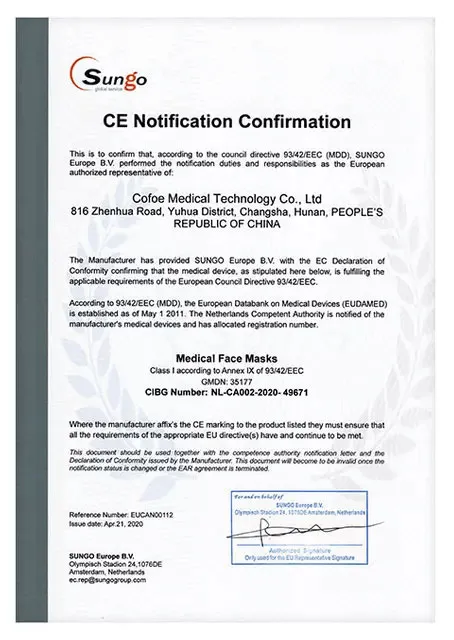
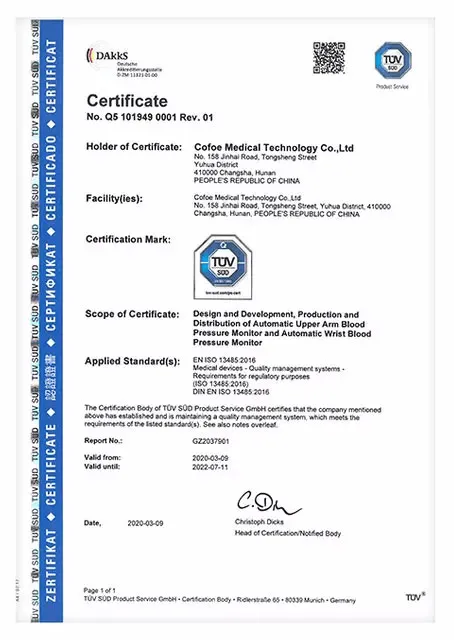
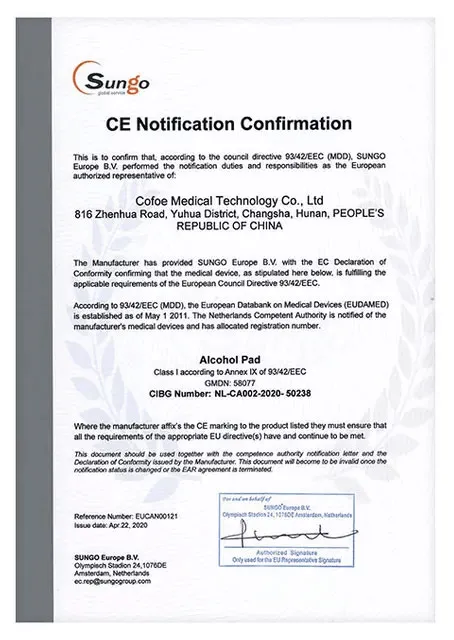
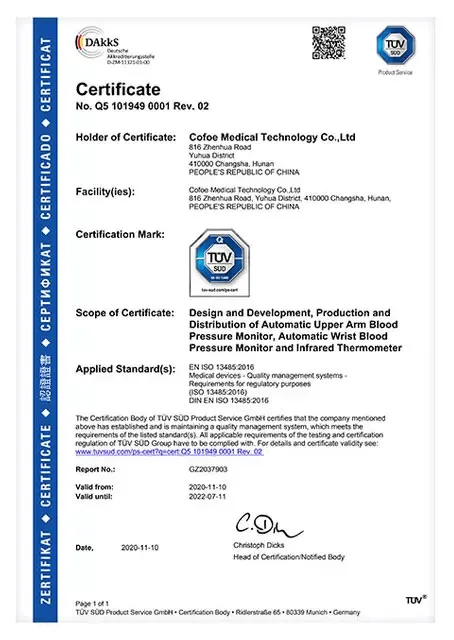
Certificate