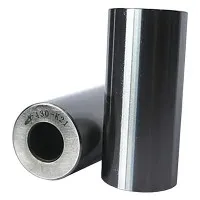
BIGUO (KS) Auto Parts Industries was established in 1990. It has become a reliable Strong Manufacturer in International market in the Field of Piston Pin and Cylinder Liner & Sleeve under the Brand name "BIGUO". Now we're the OEM suppliers for engine factories in Asia and Middle East. And we've cooperated with three famous international auto parts Groups.
Our factory
BIGUO (KS) Auto Parts Industries was established in 1990. It has become a reliable Strong Manufacturer in International market in the Field of Piston Pin and Cylinder Liner & Sleeve under the Brand name "BIGUO". BIGUO Auto Parts Industries is spread on 15,000 SQ. fts. land, well equipped with foundry and machining machineries and equipments.
Our product
We engaged in manufacturing PISTON PIN and Cylinder Liners & Sleeves for all types of Engines Applicable in Automobile, Tractor, Compressor,outboard, Generator, forklift,Earth Mover and Diesel Engine.
Quality control
We, at Biguo Auto Parts Industries strive to give good quality products at competitive prices in the identified global markets and provide customer satisfaction by consistently complying with specified requirements, continuous process improvement, involvement of personnel at all levels and upgradation of technology.
Production market
Since last 25 years BIGUO Auto Parts Ind. is manufacturing and exporting Piston Pin and Cylinder Liner & Sleeve of all type of Engines & Vehicles and being accepted in Domestic as well as Europe, America, Assia, Middle East & African market due to achieving International standard quality and implementing professional marketing and management system.


In the semi floating piston pin configuration, the pin is usually fixed relative to the piston by an interference fit with the journal in the piston.

The piston pin has an incredibly vital job, shuttling over 11,000 pounds of force up and down the bore.

In its most basic form the gudgeon pin is simply a piece of round bar. However, very few engines other than very basic, low-budget units – are equipped with solid gudgeon pins as standard.

Engine piston pins, also called gudgeon pins, or wrist pins, are used to link the small end of the connecting rod to the piston.

As a Cr-Ni series low alloy steel, after carburizing, quenching and low temperature tempering, the surface of DIN 15CrNi6 steel exhibits high fatigue strength.

The current study examined the plain fatigue and the fretting fatigue behaviors of the piston pin 16MnCr5 alloy steel under fully-reversed rotating bending loading.

Normalizing For piston pin 17CrNi6
Nominal normalizing temperature:850-880°C
Hold the temperature for several hours
Cooling in the air

If a power adder combined with higher specific output is on your agenda Trend offers a premium alternative to the H-Series that begins life using a much stronger H-13 Tool steel alloy.
Mounted on the piston skirt, the piston pin is a cylindrical dowel which is used to connect the piston and rod to move the acting force of the piston to the rod or make the rod move with the piston. A hollow pin for connecting the piston and the small end of the connecting rod. With the rotation from the crank, the connecting rod that swings and the piston that moves linearly are connected without generating a moment. It is the part of the engine that has the highest surface pressure and is difficult to lubricate, but on the other hand, weight reduction is also extremely important. Therefore, special steel is used, and after quenching the surface, it is polished to maintain toughness and wear resistance. Generally, it is one-fourth to one-fifth the diameter of the piston.
Advantages of Precision Piston Pin
Unmatched strength
Engineered from high-grade materials, our precision piston pins are designed to withstand high pressures and extreme temperatures, ensuring optimal performance and longevity for your engines.
Precision engineering
Each precision piston pin is meticulously crafted with precision engineering techniques, guaranteeing a perfect fit and seamless operation within your machinery.
Reliability
Trust in the reliability of our precision piston pins to keep engines running smoothly under the most demanding conditions. Whether it's for automotive or other related applications, our precision piston pins deliver consistent performance you can rely on.
Types of Precision Piston Pins
High precision piston pins are small but crucial components in high-performance engines. They connect the pistons to the connecting rods, allowing for the smooth transfer of force during combustion. Any misalignment or wear in the piston pin can lead to engine inefficiencies and, ultimately, mechanical failure.
Hollow piston pins
Hollow piston pins are also known as ""hollow pins."" Unlike other types of high precision piston pins, they have a hollowed-out center. This unique feature creates a channel that runs through the length of the pin. The channel allows for lubrication to be directed from the crankshaft to the piston. This design helps reduce friction and wear and tear within the engine. The hollowed-out center also reduces the overall weight of the piston pin without compromising strength. As a result, hollow pins can improve engine performance and fuel efficiency.
Wrist pins
Wrist pins, also known as ""piston pins,"" are high precision components used to connect pistons to connecting rods in an engine. They are cylindrical metal shafts that go through the piston and the connecting rod, allowing for pivoting motion. This wrist action enables the piston to move up and down smoothly within the cylinder during the combustion cycle. Any wear or play in the wrist pins can lead to engine inefficiencies and mechanical failures. As such, they need to be regularly checked and maintained. Wrist pins are available in different sizes and materials, such as steel and titanium, to suit various engine designs and performance requirements.
Full piston pins
Full piston pins are solid cylindrical rods placed through the piston and connecting rod. Unlike hollow piston pins, full piston pins do not have a channel for internal lubrication. However, they offer several advantages that make them ideal for use in engines. For example, full piston pins provide a direct and stable connection between the piston and the connecting rod. This feature minimizes lateral play or movement, ensuring a more precise and efficient combustion process. As a result, full piston pins help improve engine performance and increase power output.
What Is The Function Of The Precision Piston Pin
The function of the precision piston pin is to connect the piston and the small end of the connecting rod, and transmit the force between the piston and the connecting rod.
The precision piston pin bears periodic shock load, and it swings itself, and it works under poor lubrication conditions. Therefore, the precision piston pin is required to have sufficient strength and rigidity, good surface toughness, good wear resistance, and light weight. Precision piston pins are generally made of hollow cylinders, made of low-carbon steel and low-carbon alloy steel. The outer surface is carburized and quenched to increase the hardness. After finishing, it is polished to have high dimensional accuracy and surface finish.
When assembling the aluminum alloy piston and the precision piston pin, the piston should be heated in water or oil at a temperature of 70-90℃ to expand the precision piston pin seat hole before installing the precision piston pin. In order to prevent the axial rotation of the precision piston pin, snap rings are also installed at both ends of the pin seat.
Since there is no relative movement between the precision piston pin and the connecting rod, there is no need for a snap ring to restrict the axial position of the precision piston pin, that is, the semi-floating connection precision piston pin has no snap ring, and there is no bushing at the small end of the connecting rod. The semi-floating precision piston pin can reduce engine noise and eliminate possible accidents caused by the snap ring. It is mostly used in light high-speed engines, such as cherokee and cheetah, etc. Cars adopt this form.

Specification of High Precision Piston Pin
Material
The pins are made using high-quality steel alloys, which helps to increase strength and durability. Common alloys include chromium, nickel, and molybdenum.
Diameter
The pins have a small diameter, which makes them suitable for use in small and lightweight engines. The diameter of a high-precision piston pin ranges from 5 to 20 mm.
Length
They also have a longer length that helps to increase their strength. The length of a high-precision piston pin ranges from 30 to 80 mm.
Tolerance
The pins are designed to have a small diameter and are constructed with great precision. The tolerance of a high-precision piston pin is usually less than 0.005 mm.
Surface finish
The surface of the piston pins is finished in a way that makes them smooth. This helps to reduce friction between the pin and the piston as well as the pin and the connecting rod. Common surface finishes include polishing, coating, and grinding.
Heat treatment
The pins are subjected to a heat treatment process that helps to increase their hardness and strength. Common heat treatment processes include tempering, quenching, and hardening.
Load capacity
High-precision piston pins are designed to transfer loads between the piston and the connecting rod. As such, they are constructed to have a high load capacity. The load capacity of these pins ranges from 5000 to 30000 N.
Rotational speed
The pins are also designed to have a high rotational speed. The maximum rotational speed of a high-precision piston pin ranges from 5000 to 10000 RPM.
Maintenance of High Precision Piston Pin
Even though high-precision piston pins are designed to work for a long time without damage, it is still important to carry out regular maintenance. This is because, over time, factors such as wear and tear, damage, dirt, and debris can affect the performance of the piston pins. Below is how to maintain high-precision piston pins:
Inspection
The first step for the maintenance of high-precision piston pins is to carry out regular inspection. During inspection, check for signs of wear and tear, damage, and noise.
Cleaning
After inspection, the next step is to clean the piston pins. Cleaning helps to remove dirt, dust, and debris. The cleaning can be done using a clean cloth and mild detergent.
Lubrication
Once the piston pins have been cleaned, the next step is to lubricate them. Lubrication helps to reduce friction between the pins and the piston, as well as between the pins and the connecting rod. For lubrication, it is advisable to use high-quality engine oil.
Replacement
In case of damage or wear, the piston pins should be replaced. Before replacement, make sure the new piston pins have the same specifications and tolerances as the old ones.
Replacing a piston pin is a complex task that requires mechanical knowledge and expertise. It is not advisable to attempt this without prior experience.
Remove the engine oil and drain it. Take out the engine cover and access the engine. Detach the connecting rod from the crankshaft.
Remove the wrist pins and take out the piston from the cylinder. Clean the piston and prepare to install a new piston. Install the new piston and ring the piston in the cylinder.
Connect the connecting rod to the crankshaft. Refill the engine with oil and start the engine. These steps are not sufficient to guide anyone through the replacement of a piston pin. It is a delicate process and requires more detailed instructions. For DIYers, it is advisable to consult a mechanic or repair manual before attempting to replace a piston pin.
Our factory
BIGUO (KS) Auto Parts Industries was established in 1990. It has become a reliable Strong Manufacturer in International market in the Field of Piston Pin and Cylinder Liner & Sleeve under the Brand name "BIGUO". Now we're the OEM suppliers for engine factories in Asia and Middle East. And we've cooperated with three famous international auto parts Groups. Since last 25 years BIGUO Auto Parts Ind. is manufacturing and exporting Piston Pin and Cylinder Liner & Sleeve of all type of Engines & Vehicles and being accepted in Domestic as well as Europe, America, Assia, Middle East & African market due to achieving International standard quality and implementing professional marketing and management system. By strict monitoring of orders and developing stock plans in material, we maintain and deliver schedules in accordance to the requirements.

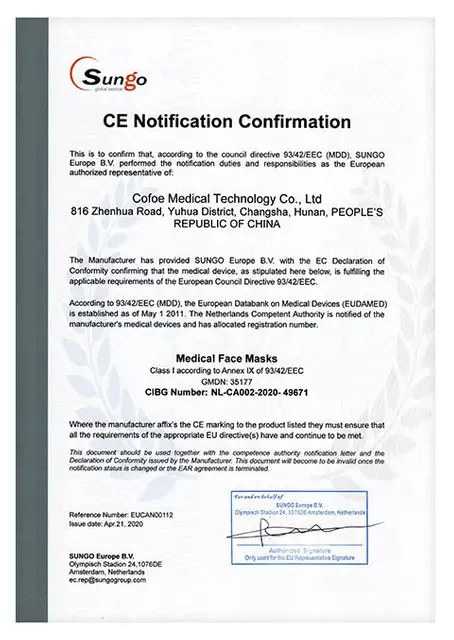
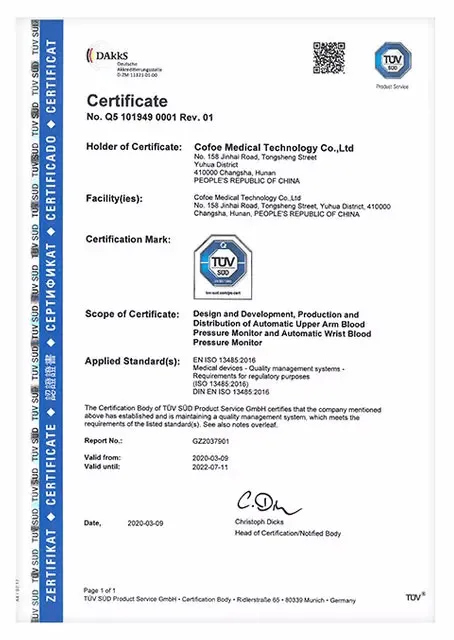
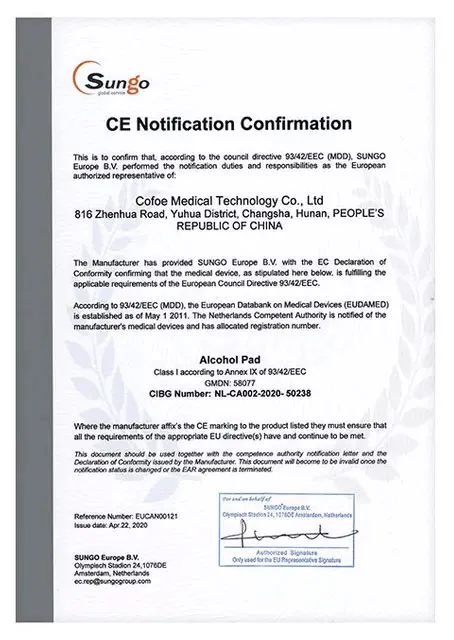
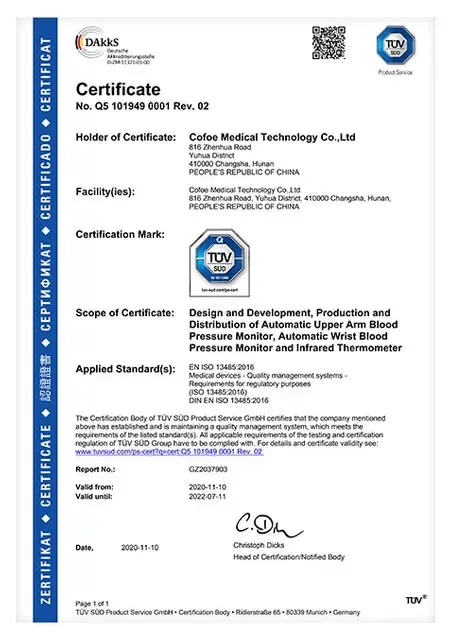
Certificate