

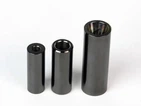
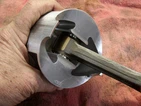


The main reasons for making piston pins cylindrical are as follows:
Efficiency of force transmission: The cylindrical shape can effectively transmit the force between the piston and connecting rod. During engine operation, the piston pin needs to withstand and transmit the gas force from the piston, and the cylindrical shape ensures that this force transmission is uniform and effective.
Manufacturing process and cost: The manufacturing process of cylindrical piston pins is relatively simple and cost-effective. The cylindrical shape makes machining and manufacturing processes more convenient, improves production efficiency, and reduces manufacturing costs.
Strength and stiffness: The cylindrical piston pin can withstand significant pressure and impact loads when connecting the piston and connecting rod small end. This shape design ensures that the piston pin has sufficient strength and stiffness to meet the working requirements of the engine in high-speed operation and harsh environments.
Wear resistance: The surface toughness and wear resistance of cylindrical piston pins are good. In poor lubrication conditions, the cylindrical shape can reduce friction with the piston and connecting rod, reduce wear, and thus extend the service life of the piston pin.
In addition, the cylindrical piston pin has a simple shape and is easy to fit and install with the piston and connecting rod. At the same time, there are multiple options for fixing cylindrical piston pins, such as floating pins, semi floating pins, and fixed pins, to adapt to different engine designs and working requirements.
In summary, the piston pin is made into a cylindrical shape based on various considerations such as its efficiency in transmitting force, manufacturing process and cost, strength and stiffness, and wear resistance.
Why Is The Piston Pin Made Into A Cylinder
Apr 15, 2024 Leave a message
Send Inquiry